<?xml version="1.0" encoding="utf-8"?><feed xmlns="http://www.w3.org/2005/Atom" xml:lang="en"><generator uri="https://jekyllrb.com/" version="4.4.1">Jekyll</generator><link href="https://m.lemays.org/feed.xml" rel="self" type="application/atom+xml" /><link href="https://m.lemays.org/" rel="alternate" type="text/html" hreflang="en" /><updated>2026-09-12T19:58:12-07:00</updated><id>https://m.lemays.org/feed.xml</id><title type="html">Michael LeMay</title><subtitle>Personal site of Michael LeMay.</subtitle><author><name>Michael LeMay</name></author><entry><title type="html">Combining tools to detach Delta single-hole kitchen faucets</title><link href="https://m.lemays.org/post/detaching-delta-kitchen-faucet/" rel="alternate" type="text/html" title="Combining tools to detach Delta single-hole kitchen faucets" /><published>2022-12-27T00:00:00-08:00</published><updated>2022-12-27T00:00:00-08:00</updated><id>https://m.lemays.org/post/detaching-delta-kitchen-faucet</id><content type="html" xml:base="https://m.lemays.org/post/detaching-delta-kitchen-faucet/"><![CDATA[<div class="paragraph">
<p>Some Delta single-hole faucets use a large nut that screws onto a long
stem to tighten a clamp that grips the countertop. It can be a challenge
both to firmly tighten that nut as well as to loosen it, since the fins
are small on the wrench that Delta includes with those faucets.</p>
</div>
<div class="paragraph">
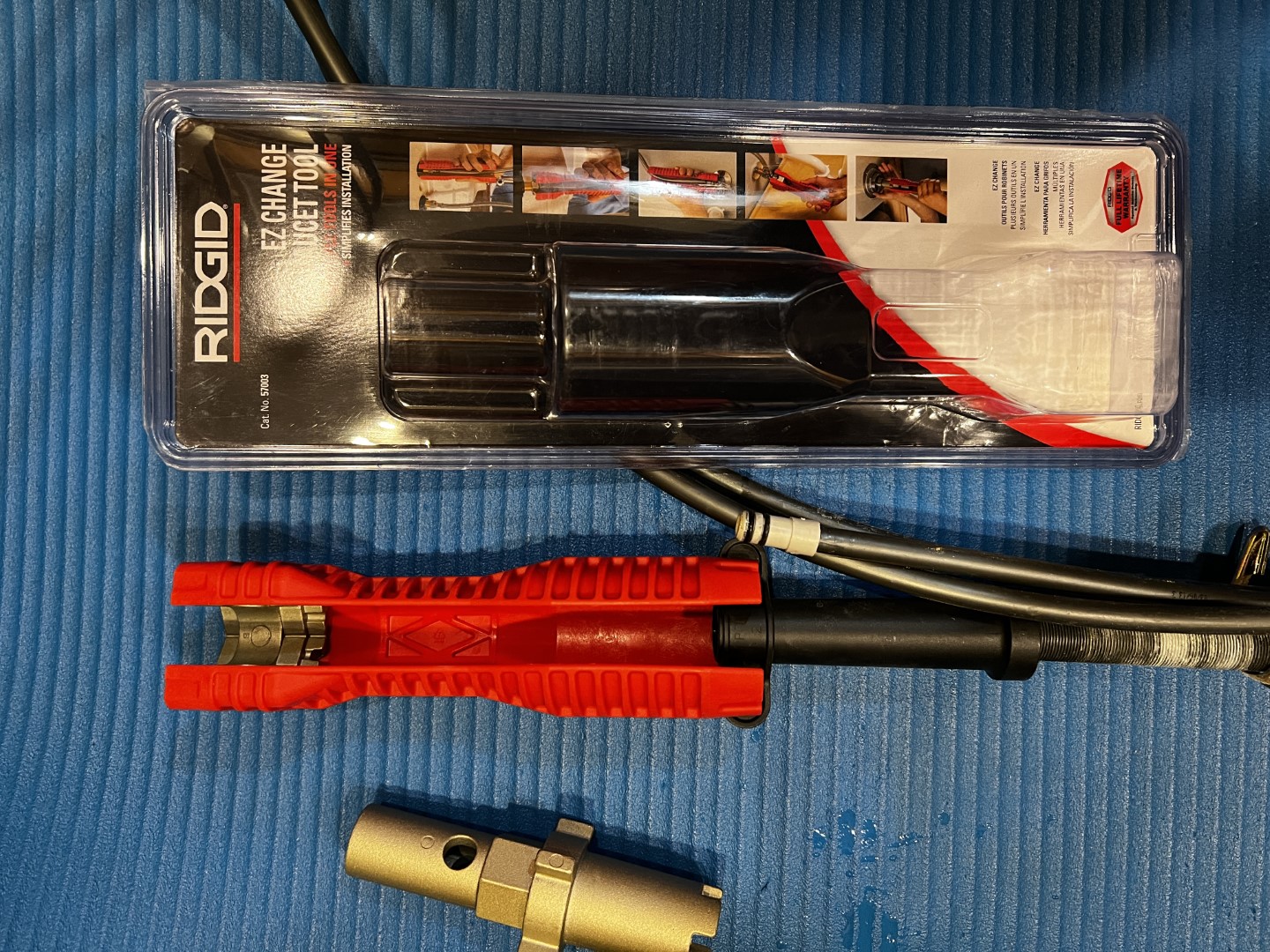
<p>However, I discovered that those small fins happen to fit neatly into
one of the sets of slots on the Ridgid EZ Change Faucet Tool (Cat.
No. 57003) as you can see here:</p>
</div>
<div class="imageblock">
<div class="content">
<img src="/assets/images/posts/detaching-delta-kitchen-faucet/faucet-tools.JPG" alt="Delta faucet wrench in Ridgid tool">
</div>
<div class="title">Figure 1. Small fins on Delta faucet wrench fitting neatly into slots in Ridgid tool</div>
</div>
<div class="paragraph">
<p>The large gripping surface on the Ridgid tool made it much easier for me
to adjust the nut.</p>
</div>
<div class="paragraph">
<p>The cardboard insert for the Ridgid tool only shows those slots being
used for adjusting certain types of nuts directly, not combined with
another wrench, so I thought that sharing this tip might be helpful to
others with this type of faucet.</p>
</div>]]></content><author><name>Michael LeMay</name></author><category term="personal" /><summary type="html"><![CDATA[Some Delta single-hole faucets use a large nut that screws onto a long stem to tighten a clamp that grips the countertop. It can be a challenge both to firmly tighten that nut as well as to loosen it, since the fins are small on the wrench that Delta includes with those faucets.]]></summary></entry><entry><title type="html">Adding a heat pump alongside a natural gas furnace with tight duct turns</title><link href="https://m.lemays.org/post/heat-pump-analysis/" rel="alternate" type="text/html" title="Adding a heat pump alongside a natural gas furnace with tight duct turns" /><published>2022-04-04T00:00:00-07:00</published><updated>2022-04-04T00:00:00-07:00</updated><id>https://m.lemays.org/post/heat-pump-analysis</id><content type="html" xml:base="https://m.lemays.org/post/heat-pump-analysis/"><![CDATA[<div class="sect1">
<h2 id="introduction"><a class="anchor" href="#introduction"></a>Introduction</h2>
<div class="sectionbody">
<div class="paragraph">
<p>We attempted in 2022 to replace our 30-year old air conditioner with an
air-source heat pump. Unfortunately, despite repeated service visits, it
still does not operate properly. I describe our experiences here in case
others with similar systems find this to be useful. Perhaps you landed
here by searching for a symptom that you are currently observing in your
HVAC system. Maybe this post will help you to ask questions of your HVAC
service company that can lead to getting your HVAC system working more
quickly than would otherwise be the case and be less likely to be
surprised by inoperative air conditioning on the first hot day of
summer!</p>
</div>
</div>
</div>
<div class="sect1">
<h2 id="initial-installation"><a class="anchor" href="#initial-installation"></a>Initial installation</h2>
<div class="sectionbody">
<div class="paragraph">
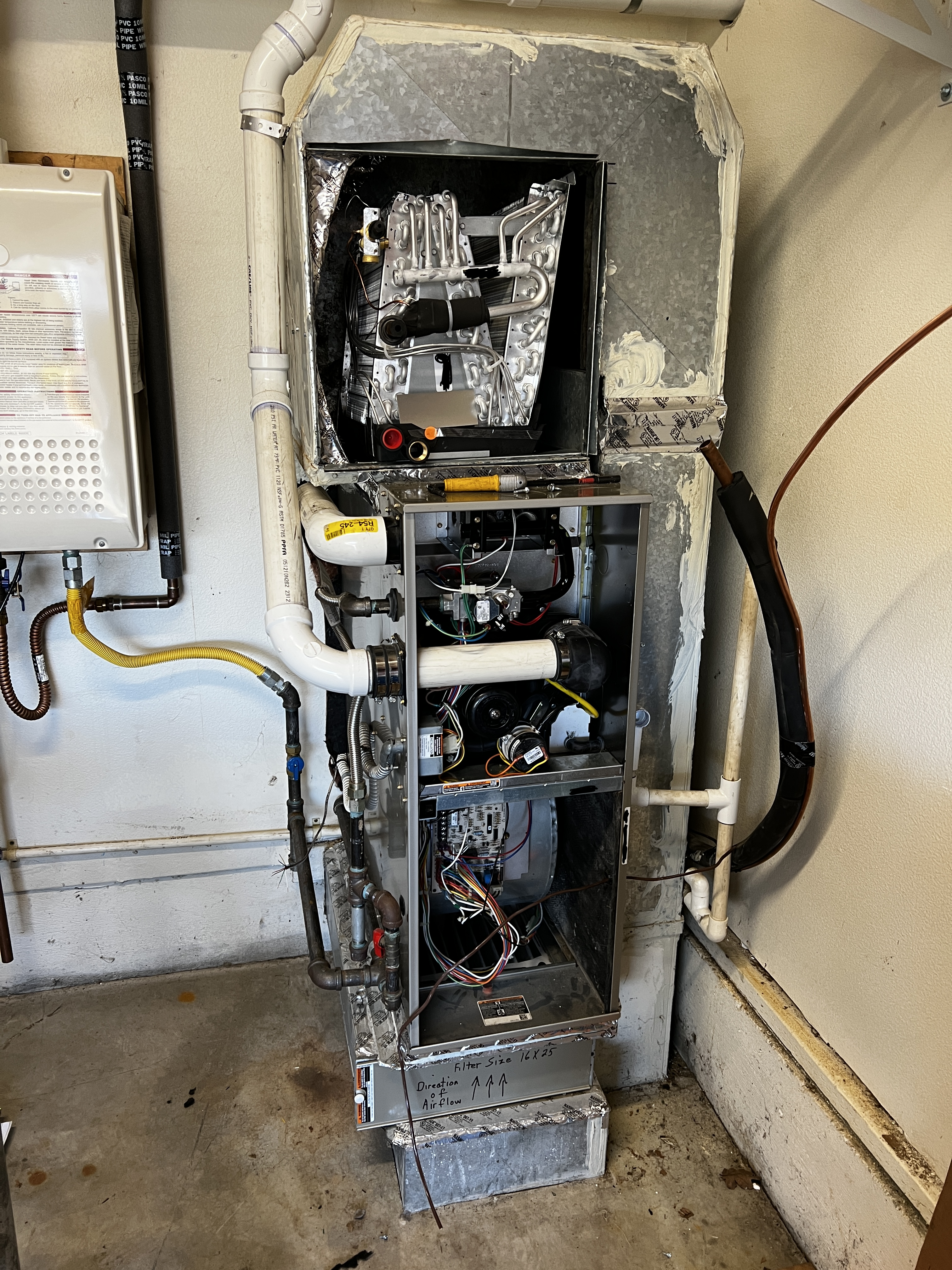
<p>We had a single-stage heat pump installed. The installers replaced our
old A-type evaporator coil with an N-type coil. The evaporator coil is
the one that is placed inline with the duct work to transfer heat
between interior air and the refrigerant. Our HVAC ducts have a
180-degree turn just above our upflow furnace and evaporator coil to
direct the air down into ductwork in our crawlspace. That tight turn
seems to be a main contributing factor in the problems that I will
describe below. The installers sought to improve airflow by inserting
additional sheet metal in the cabinet to round out the corners, but that
turned out to be inadequate. This added sheet metal is visible to the
left of the new coil in the following picture:</p>
</div>
<div class="imageblock">
<div class="content">
<img src="/assets/images/posts/heat-pump-analysis/n-coil-install.png" alt="Newly installed N-type coil">
</div>
<div class="title">Figure 1. Newly installed N-type coil with additional sheet metal to smooth airflow to the left.</div>
</div>
<div class="paragraph">
<p>Since I kept our high-efficiency natural gas furnace as well, that
required me to decide a temperature threshold for switching between the
dual fuel options (natural gas and electricity). See
<a href="https://github.com/mdlemay/heat-pump-analysis/blob/main/heat-pumps.ipynb" class="bare">https://github.com/mdlemay/heat-pump-analysis/blob/main/heat-pumps.ipynb</a>
for more on that.</p>
</div>
</div>
</div>
<div class="sect1">
<h2 id="diagnosing-short-cycling-in-heating-mode"><a class="anchor" href="#diagnosing-short-cycling-in-heating-mode"></a>Diagnosing short cycling in heating mode</h2>
<div class="sectionbody">
<div class="paragraph">
<p>When the heat pump was first installed, it could only run for six or
seven minutes at a time. This is known as &#8220;short-cycling.&#8221; It also
made loud hissing and gurgling sounds as it was about to shutdown. The
HVAC company sent out a technician who measured the coolant pressures as
the heat pump was operating, and he determined that the pressures were
far too high. He had to remove a substantial amount of coolant to bring
the pressures into the proper range. He noted that since we have a very
short run of copper tubing between our heat pump and HVAC system, even
the coolant that came pre-charged in the heat pump may have been
excessive. After he adjusted the pressure, the heat pump apparently
worked well for heating. However, that was not the end of the story.</p>
</div>
</div>
</div>
<div class="sect1">
<h2 id="initial-attempt-to-repair-frosting-in-cooling-mode"><a class="anchor" href="#initial-attempt-to-repair-frosting-in-cooling-mode"></a>Initial attempt to repair frosting in cooling mode</h2>
<div class="sectionbody">
<div class="paragraph">
<p>On the first hot day of summer, we activated the heat pump’s cooling
mode. This was a mistake, as we should have tested its cooling function
on this new system as soon as possible. That way, we would have beaten
the rush of calls to the HVAC installer on the first truly hot day of
the year.</p>
</div>
<div class="paragraph">
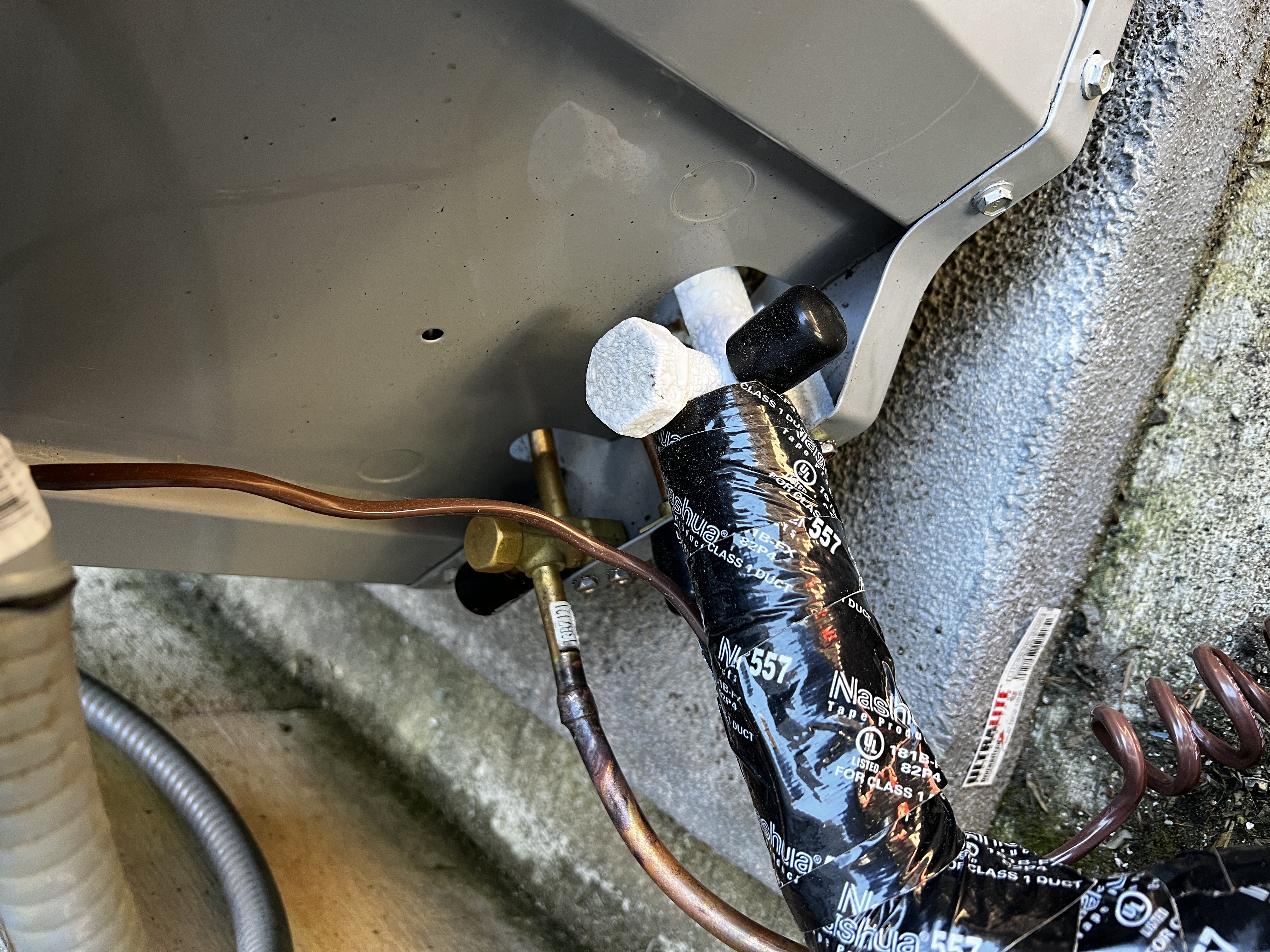
<p>We ran the heat pump in cooling mode for hours, but it was unable to
cool our house. When I went outside to inspect the heat pump, this is
what I saw:</p>
</div>
<div class="imageblock">
<div class="content">
<img src="/assets/images/posts/heat-pump-analysis/frosted-heat-pump.jpg" alt="Frosted heat pump.">
</div>
<div class="title">Figure 2. Frosted heat pump.</div>
</div>
<div class="paragraph">
<p>The refrigerant outlet from the heat pump was frosted over. I reported
it to the HVAC installer, and they managed to get us on their schedule
quickly despite being inundated with calls due to the heat.</p>
</div>
<div class="paragraph">
<p>The technician determined that the refrigerant level was too low for
effective cooling. However, he wanted to avoid repeating the situation
that led to short-cycling in heating mode. So, he diagnosed the airflow
around the evaporator coil and determined that too much air was escaping
past the new N-type coil. He added sheet metal on the right side of the
coil to direct all of the air through the coil.</p>
</div>
<div class="paragraph">
<p>Unfortunately, this turned out to be ineffective. The system still
failed to cool our house, and the refrigerant outlet still frosted over.</p>
</div>
</div>
</div>
<div class="sect1">
<h2 id="second-attempt-to-repair-frosting-in-cooling-mode"><a class="anchor" href="#second-attempt-to-repair-frosting-in-cooling-mode"></a>Second attempt to repair frosting in cooling mode</h2>
<div class="sectionbody">
<div class="paragraph">
<p>Next, the HVAC installer returned for a thorough inspection of the
system. He determined that the airflow around the evaporator coil was
insufficient. He proposed either replacing the N-type coil to revert
back to an A-type coil or to expand the ductwork vertically above the
evaporator coil to create a freer flow of air around the tight turn in
that duct.</p>
</div>
<div class="paragraph">
<p>He decided to first replace the coil. However, once he had installed it,
he concluded that it still needed more space around it for proper
airflow. His options for achieving that were limited due to an
unfortunate decision by the plumber who installed our tankless water
heater to route the exhaust pipe only a short distance above our
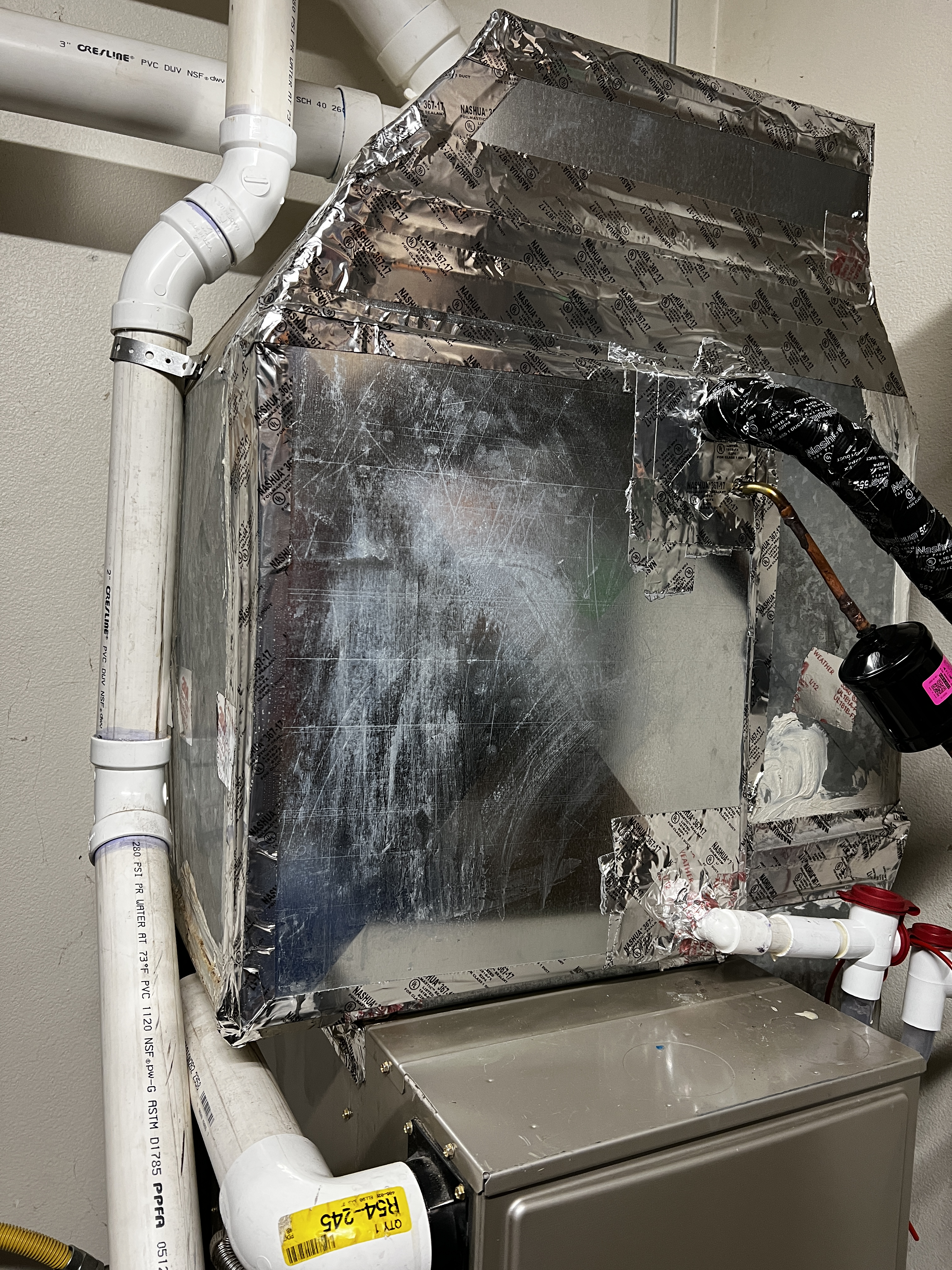
ductwork. So, the HVAC installer just increased the headroom in the duct
as much as he could, as you can see below in comparison to the earlier
pictures.</p>
</div>
<div class="imageblock">
<div class="content">
<img src="/assets/images/posts/heat-pump-analysis/increased-headroom.png" alt="Increased duct headroom above evaporator coil">
</div>
<div class="title">Figure 3. Increased duct headroom above evaporator coil.</div>
</div>
<div class="paragraph">
<p>After all that, the system finally provides adequate cooling. It still
allows the indoor temperature to creep up in the afternoon on the
hottest days like the system that it replaced also allowed, but it seems
that a much more substantial overhaul of our HVAC system would be needed
if we wanted to avoid that.</p>
</div>
</div>
</div>
<div class="sect1">
<h2 id="continued-short-cycling-in-heating-mode"><a class="anchor" href="#continued-short-cycling-in-heating-mode"></a>Continued short cycling in heating mode</h2>
<div class="sectionbody">
<div class="paragraph">
<p>When heating season descended once again, the system again exhibited
short cycling, although it was at least able to run longer (e.g., 37
minutes in one instance) than it did prior to the system enhancements
described above.</p>
</div>
<div class="paragraph">
<p>An HVAC technician came up with a hypothesis that the return air duct
was too constricted. He tested this by removing the filter and filter
door, i.e., sucking in air from the garage directly. This allowed the
system to run for 1.25 hours, and the technician thought that installing
an additional return duct might provide even more airflow than that and
allow continuous operation. That would have been an invasive change in
our home layout, though. It also was not guaranteed to resolve the
issue. So, we opted not to go that route.</p>
</div>
<div class="paragraph">
<p>For now, we continue to rely on natural gas for our home heating.</p>
</div>
</div>
</div>
<div class="sect1">
<h2 id="resources"><a class="anchor" href="#resources"></a>Resources</h2>
<div class="sectionbody">
<div class="ulist">
<ul>
<li>
<p><a href="https://www.nytimes.com/wirecutter/reviews/heat-pump-installer">New
York Times - Wirecutter: Underqualified Installers Are Giving Heat Pumps
a Bad Name. Here’s How to Find a Competent Pro.</a></p>
</li>
</ul>
</div>
</div>
</div>]]></content><author><name>Michael LeMay</name></author><category term="personal" /><summary type="html"><![CDATA[Introduction]]></summary></entry><entry><title type="html">Gardening in a suburb of Portland, Oregon</title><link href="https://m.lemays.org/post/gardening/" rel="alternate" type="text/html" title="Gardening in a suburb of Portland, Oregon" /><published>2020-04-18T00:00:00-07:00</published><updated>2020-04-18T00:00:00-07:00</updated><id>https://m.lemays.org/post/gardening</id><content type="html" xml:base="https://m.lemays.org/post/gardening/"><![CDATA[<div class="paragraph">
<p>My family and I have been cultivating our backyard (and front yard)
garden in a suburb of Portland, Oregon, for eight years. I grew up in
central Wisconsin pulling weeds from rows of beans and strawberries, and
my wife was a patio gardener during her childhood and in grad school. We
enjoyed growing a tray of culinary herbs together in our apartment as
newlyweds while finishing grad school. The University of Illinois has a
long agricultural legacy, and we enjoyed touring the student-run farm
during our time there. We were excited to expand to backyard gardening
as soon as we purchased a house. Growing space was one of the main
criteria in our minds as we were browsing house listings.</p>
</div>
<div class="paragraph">
<p>A fun aspect of backyard gardening is the ability to grow unusual and
heirloom varieties of plants that are too delicate or esoteric for
stores to stock. We grow both a vegetable garden as well as a small
&#8220;orchard&#8221; with a wide variety of fruits. This also has the benefit of
spacing out harvests based on when each type of fruit ripens. The mild
weather west of the Cascades opens up a wide selection of fruit trees
and vines. This was especially exciting for me having grown up browsing
garden nursery catalogs and realizing how few types of fruits can
tolerate Wisconsin’s winters.</p>
</div>
<div class="paragraph">
<p>Local garden nurseries offer many vegetable seedlings, but we grow most
of our plants from seed (starting them in our garage) to gain access to
an even wider assortment and to minimize costs. A heating mat seems to
increase germination rates
(e.g. <a href="https://territorialseed.com/products/heat-mat-electra-grow" class="bare">https://territorialseed.com/products/heat-mat-electra-grow</a>), and
we use a grow light to make up for a dearth of sunny windowsills in our
house
(e.g. <a href="https://www.homedepot.com/p/ViaVolt-2-ft-4-Bulb-T5-High-Output-Copper-Fluorescent-Grow-Light-Fixture-V24/202985194" class="bare">https://www.homedepot.com/p/ViaVolt-2-ft-4-Bulb-T5-High-Output-Copper-Fluorescent-Grow-Light-Fixture-V24/202985194</a>).
I like to support our local seed suppliers such as
<a href="https://territorialseed.com/" class="bare">https://territorialseed.com/</a>, but I still also put in orders to another
one on the opposite side of the country: <a href="https://www.johnnyseeds.com/" class="bare">https://www.johnnyseeds.com/</a>
They have a great selection, and they are my parents’ favorite seed
supplier.</p>
</div>
<div class="paragraph">
<p>There is a wealth of resources available online with gardening guidance,
and I listed some of my favorites below. Many of these are specific to
the Portland area.</p>
</div>
<div class="sect1">
<h2 id="vegetable-gardening-resources"><a class="anchor" href="#vegetable-gardening-resources"></a>Vegetable gardening resources</h2>
<div class="sectionbody">
<div class="ulist">
<ul>
<li>
<p><a href="https://portlandnursery.com/docs/veggies/VeggieCalendar.pdf">Schedule
for when to start and transplant vegetables</a></p>
</li>
<li>
<p><a href="https://catalog.extension.oregonstate.edu/sites/catalog/files/project/pdf/ec871.pdf">OSU
Extension guide for vegetable gardening</a></p>
</li>
<li>
<p><a href="https://portlandnursery.com/veggies/">Other vegetable growing info from
Portland Nursery</a></p>
</li>
<li>
<p><a href="http://www.tualatinvalleygardenclub.org/">Tualitin Valley Garden Club
with additional tips in their newsletter and an annual plant sale</a></p>
</li>
<li>
<p><a href="http://washingtoncountymastergardeners.org/">Washington County Master
Gardeners</a></p>
</li>
<li>
<p><a href="https://www.johnnyseeds.com/on/demandware.static/-/Library-Sites-JSSSharedLibrary/default/dw913ac4d0/assets/information/seed-storage-guide.pdf">Storage
life expectancy for seeds</a></p>
</li>
</ul>
</div>
<div class="paragraph">
<p>One of the biggest factors in whether each year’s garden is a success is
whether my transplanted seedlings became cold-shocked due to being
planted too early. Another big factor is the quality of the soil.
Ironically, improving the quality of the soil that I used for seed
starting in 2019 led to a terrible tomato harvest that year due to the
seedlings quickly getting too tall for my seed-starting shelf. I was
forced to transplant them far too early (late March), about a month
after starting them. The weather also happened to be cold that Spring,
compounding the problem. Good soil is always a positive, so I shifted my
seed-starting dates back by a couple of months in 2020 to hopefully
avoid a repeat of this problem. I talk more in the next section about
developing soil quality.</p>
</div>
<div class="paragraph">
<p>Even when particular crops struggle in any given year, there are usually
other crops that thrive, which helps to balance things out. It varies
each year depending on weather and how I tend the plants. Some years, we
struggle to keep up with our tomato harvest. In 2019, even though the
tomato harvest was light, we enjoyed a consistent supply of green beans.</p>
</div>
</div>
</div>
<div class="sect1">
<h2 id="developing-rich-soil"><a class="anchor" href="#developing-rich-soil"></a>Developing rich soil</h2>
<div class="sectionbody">
<div class="paragraph">
<p>Organic matter and nutrients can be quickly consumed by growing veggies
or washed away in our wet winters. So, I need to add sizable quantities
of compost to my garden beds, lawn, and orchard to keep up. Buying
compost in small bags is expensive for large quantities, so it was
actually much more economical for me to order a bulk delivery from a
local supplier, e.g. <a href="https://shbark.com/products/sandh-premium-compost" class="bare">https://shbark.com/products/sandh-premium-compost</a>.</p>
</div>
<div class="paragraph">
<p>We also maintain a worm bin to transform our veggie scraps into compost.</p>
</div>
</div>
</div>
<div class="sect1">
<h2 id="fruit-tree-and-berry-resources"><a class="anchor" href="#fruit-tree-and-berry-resources"></a>Fruit tree and berry resources</h2>
<div class="sectionbody">
<div class="ulist">
<ul>
<li>
<p><a href="https://catalog.extension.oregonstate.edu/sites/catalog/files/project/pdf/ec819.pdf">OSU
extension guide with recommended varieties of fruit trees</a></p>
</li>
<li>
<p><a href="http://grownorthwest.com/2013/03/fruits-and-berries-the-basics-of-growing-at-home/">Guide
to some berries that grow well in the PNW</a></p>
<div class="ulist">
<ul>
<li>
<p>Another type of berry that we enjoy growing is the Goji berry.
However, it spreads like bamboo! I had to dig out my first one for that
reason and replant one in a wine barrel to keep it contained.</p>
</li>
</ul>
</div>
</li>
</ul>
</div>
</div>
</div>
<div class="sect1">
<h2 id="general-resources"><a class="anchor" href="#general-resources"></a>General resources</h2>
<div class="sectionbody">
<div class="paragraph">
<p><a href="https://www.growingagreenerworld.com/">&#8220;Growing a Greener World&#8221;</a> has a
lot of inspiring and informative programs. For example, it has
<a href="https://www.growingagreenerworld.com/best-tomato-support-criteria/">ideas
for large&#44; sturdy tomato trellises</a>. The small ones commonly sold at
stores are inadequate for many types of tomatoes.</p>
</div>
</div>
</div>
<div class="sect1">
<h2 id="favorite-plant-varieties"><a class="anchor" href="#favorite-plant-varieties"></a>Favorite plant varieties</h2>
<div class="sectionbody">
<div class="paragraph">
<p>Here are some of our favorite varieties of plants that we have grown
through the years. We don’t have enough space to grow them all at once,
so we rotate through these along with trying new things each year:</p>
</div>
<div class="sect2">
<h3 id="vegetables"><a class="anchor" href="#vegetables"></a>Vegetables</h3>
<div class="ulist">
<ul>
<li>
<p>Cucurbits</p>
<div class="ulist">
<ul>
<li>
<p>Sour Gherkins</p>
</li>
</ul>
</div>
</li>
<li>
<p>Husk cherries</p>
<div class="ulist">
<ul>
<li>
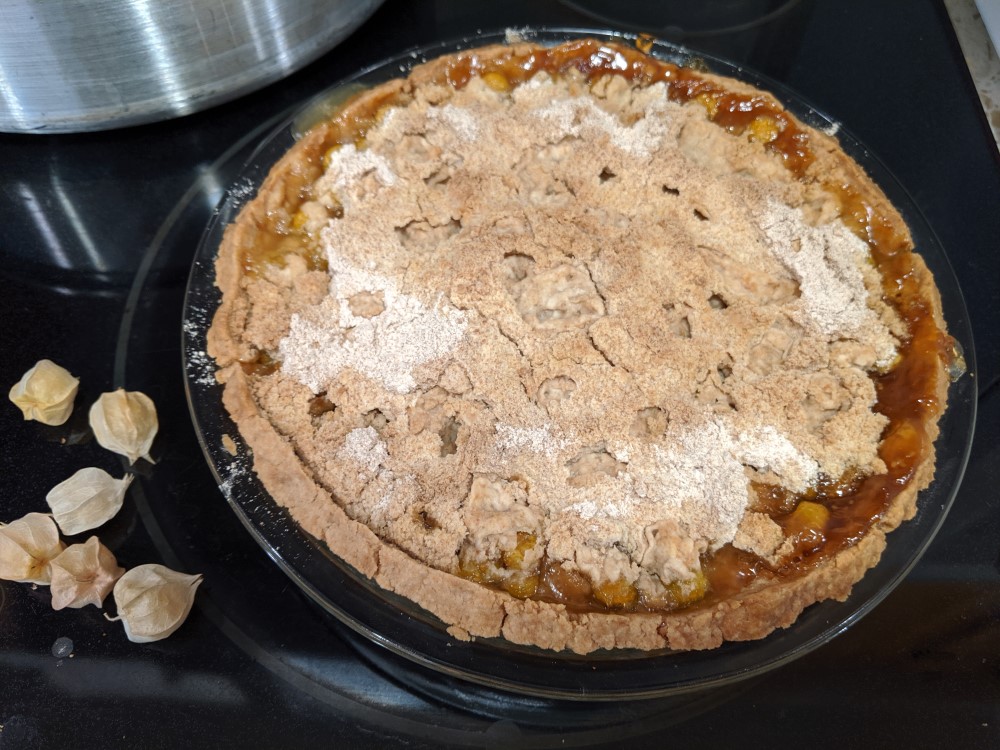
<p>Goldie (A recommendation from someone who I met while walking past
the community gardens in Bethany Lake Park.)
<span class="image"><img src="/assets/images/posts/gardening/husk-cherry-pie.jpg" alt="Husk cherry pie"></span></p>
</li>
</ul>
</div>
</li>
<li>
<p>Lettuce (important to pick varieties that resist bitterness)</p>
<div class="ulist">
<ul>
<li>
<p>Green romaine</p>
</li>
<li>
<p>Red oak leaf</p>
</li>
</ul>
</div>
</li>
<li>
<p>Melons</p>
<div class="ulist">
<ul>
<li>
<p>Savor Charentais</p>
</li>
</ul>
</div>
</li>
<li>
<p>Peas</p>
<div class="ulist">
<ul>
<li>
<p>Austrian field peas as a winter cover crop that is also great as a
salad</p>
</li>
<li>
<p>Snow peas</p>
<div class="ulist">
<ul>
<li>
<p>Oregon Giant</p>
</li>
<li>
<p>Oregon Sugar Pod II</p>
</li>
</ul>
</div>
</li>
</ul>
</div>
</li>
<li>
<p>Peppers</p>
<div class="ulist">
<ul>
<li>
<p>Baron poblano</p>
</li>
<li>
<p>Jedi jalapeno</p>
</li>
<li>
<p>King Arthur bell</p>
</li>
<li>
<p>Red Ember cayenne</p>
</li>
</ul>
</div>
</li>
<li>
<p>Radish</p>
<div class="ulist">
<ul>
<li>
<p>Tricolor</p>
</li>
</ul>
</div>
</li>
<li>
<p>Squash</p>
<div class="ulist">
<ul>
<li>
<p>Delicata</p>
</li>
<li>
<p>North Georgia Candy Roaster</p>
</li>
</ul>
</div>
</li>
<li>
<p>Tomatoes</p>
<div class="ulist">
<ul>
<li>
<p>Cherry</p>
<div class="ulist">
<ul>
<li>
<p>Indigo Cherry</p>
</li>
<li>
<p>Mountain Magic</p>
<div class="ulist">
<ul>
<li>
<p>This, Defiant, and Plum Regal were all developed recently at
UW-Madison.</p>
</li>
</ul>
</div>
</li>
<li>
<p>Yellow Cherry</p>
</li>
</ul>
</div>
</li>
<li>
<p>Mid-size</p>
<div class="ulist">
<ul>
<li>
<p>Defiant</p>
</li>
<li>
<p>New Girl</p>
</li>
</ul>
</div>
</li>
<li>
<p>Plum (for sauce)</p>
<div class="ulist">
<ul>
<li>
<p>Plum Regal</p>
</li>
</ul>
</div>
</li>
<li>
<p>Slicer/beefsteak</p>
<div class="ulist">
<ul>
<li>
<p>Big Beef</p>
</li>
</ul>
</div>
</li>
</ul>
</div>
</li>
</ul>
</div>
</div>
<div class="sect2">
<h3 id="fruits"><a class="anchor" href="#fruits"></a>Fruits</h3>
<div class="ulist">
<ul>
<li>
<p>Blackberry</p>
<div class="ulist">
<ul>
<li>
<p>Ardenberry (purchased directly from its namesake, the former county
extension agent for our area, Mr. Arden, at the Tualitin Valley Garden
Club sale)</p>
</li>
<li>
<p>Obsidian</p>
</li>
<li>
<p>Triple Crown thornless</p>
</li>
</ul>
</div>
</li>
<li>
<p>Fig</p>
<div class="ulist">
<ul>
<li>
<p>Brown Turkey</p>
</li>
</ul>
</div>
</li>
<li>
<p>Goji</p>
</li>
<li>
<p>Honeyberries</p>
</li>
<li>
<p>Kiwi</p>
<div class="ulist">
<ul>
<li>
<p>Arctic Beauty</p>
</li>
</ul>
</div>
</li>
<li>
<p>Peach</p>
<div class="ulist">
<ul>
<li>
<p>PixZee</p>
</li>
</ul>
</div>
</li>
<li>
<p>Raspberry</p>
<div class="ulist">
<ul>
<li>
<p>Fallgold</p>
</li>
<li>
<p>Some red summer-bearing variety</p>
</li>
</ul>
</div>
</li>
<li>
<p>Strawberries</p>
<div class="ulist">
<ul>
<li>
<p>Delizz (day-neutral variety so that it produces much of the year)</p>
</li>
</ul>
</div>
</li>
</ul>
</div>
</div>
<div class="sect2">
<h3 id="flowers"><a class="anchor" href="#flowers"></a>Flowers</h3>
<div class="ulist">
<ul>
<li>
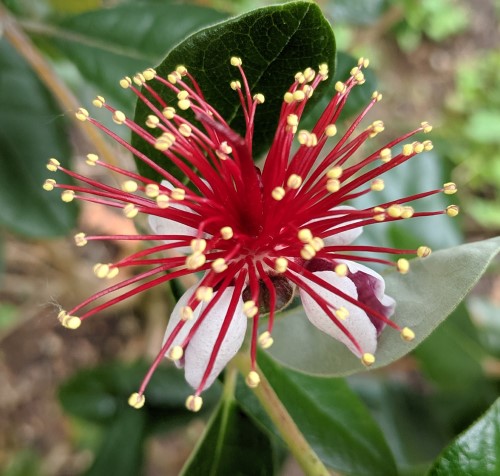
<p>Feijoa/Pineapple Guava <span class="image"><img src="/assets/images/posts/gardening/feijoa.jpg" alt="Feijoa blossom"></span></p>
<div class="ulist">
<ul>
<li>
<p>This doesn’t fruit here, but we enjoy eating the sweet-tasting flower
petals.</p>
</li>
</ul>
</div>
</li>
<li>
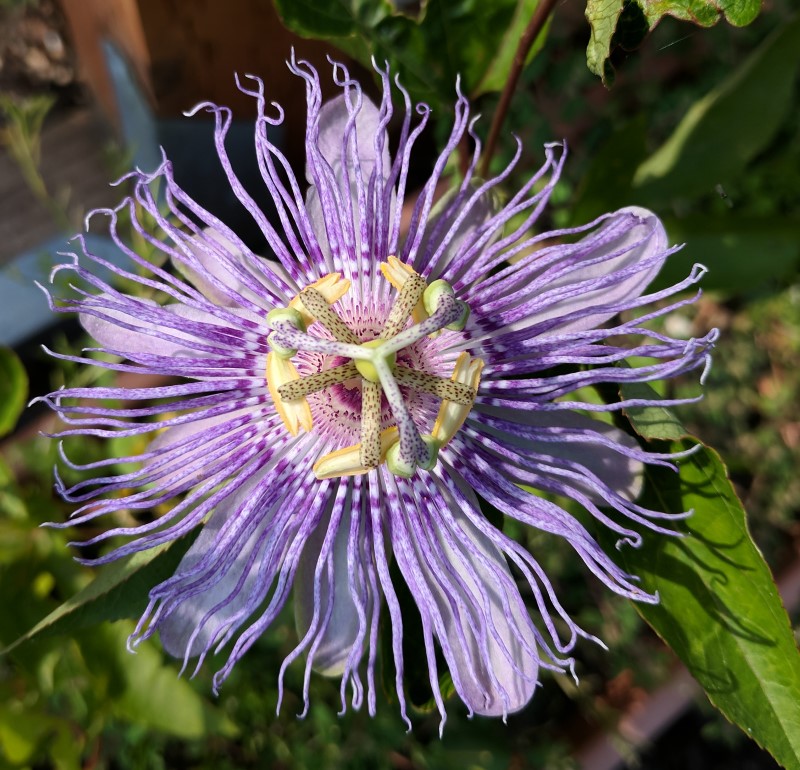
<p>Passionflower <span class="image"><img src="/assets/images/passionflower.jpg" alt="Passionflower"></span></p>
<div class="ulist">
<ul>
<li>
<p>I haven’t yet succeeded in keeping it alive longer than a couple of
years, though.</p>
</li>
<li>
<p>I have harvested a few passionfruits, but our yard doesn’t have the
carpenter bees that are needed for them to produce full fruits, Instead,
each fruit had only a few developed seeds.</p>
</li>
</ul>
</div>
</li>
<li>
<p>African marigold</p>
<div class="ulist">
<ul>
<li>
<p>These get quite tall and keep flowering late into Fall.</p>
</li>
</ul>
</div>
</li>
<li>
<p>American giant sunflowers</p>
<div class="ulist">
<ul>
<li>
<p>Very tall! We even managed to harvest some of the seeds last year
before the squirrels.</p>
</li>
</ul>
</div>
</li>
<li>
<p>Hardy Fuchsia</p>
<div class="ulist">
<ul>
<li>
<p>This is a favorite for hummingbirds.</p>
</li>
</ul>
</div>
</li>
<li>
<p>Rosemary</p>
<div class="ulist">
<ul>
<li>
<p>The previous owners planted this, and it helps to sustain
over-wintering hummingbirds with its bountiful blossoms that appear
early in the year. The whole family really enjoys it on grilled cheese,
too.</p>
</li>
</ul>
</div>
</li>
<li>
<p>Artichoke</p>
<div class="ulist">
<ul>
<li>
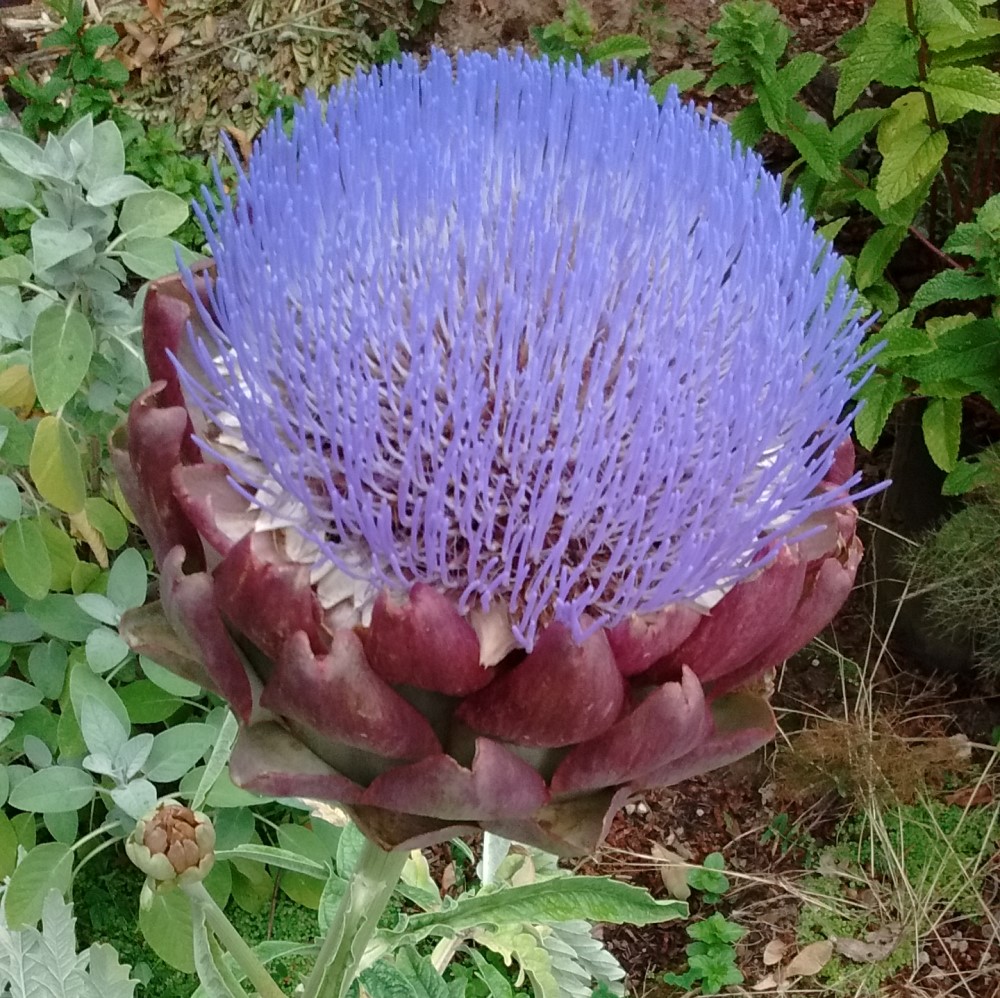
<p>This may seem a better fit for the vegetable section, but the flowers
are so stunning that I don’t harvest them for food. It’s especially fun
to watch bumblebees crawl through these.
<span class="image"><img src="/assets/images/posts/gardening/artichoke.jpg" alt="Artichoke blossom"></span></p>
</li>
</ul>
</div>
</li>
</ul>
</div>
</div>
</div>
</div>]]></content><author><name>Michael LeMay</name></author><category term="personal" /><summary type="html"><![CDATA[My family and I have been cultivating our backyard (and front yard) garden in a suburb of Portland, Oregon, for eight years. I grew up in central Wisconsin pulling weeds from rows of beans and strawberries, and my wife was a patio gardener during her childhood and in grad school. We enjoyed growing a tray of culinary herbs together in our apartment as newlyweds while finishing grad school. The University of Illinois has a long agricultural legacy, and we enjoyed touring the student-run farm during our time there. We were excited to expand to backyard gardening as soon as we purchased a house. Growing space was one of the main criteria in our minds as we were browsing house listings.]]></summary><media:thumbnail xmlns:media="http://search.yahoo.com/mrss/" url="https://m.lemays.org/assets/images/posts/gardening/featured.jpg" /><media:content medium="image" url="https://m.lemays.org/assets/images/posts/gardening/featured.jpg" xmlns:media="http://search.yahoo.com/mrss/" /></entry></feed>